Why Project Schedules Fail Before Execution Begins
Angela Lung'aho5 min read
When a project starts to slip, the schedule is often blamed first. Deadlines are missed, milestones shift, and the team is asked to work faster. In reality, most schedule failures begin weeks or months earlier — in the work that happens before the first task is even assigned.
A schedule is only as strong as the assumptions behind it. If the scope is unclear, the estimates are optimistic, or stakeholders are not aligned on priorities, the schedule becomes a wish list rather than a plan. Execution then exposes problems that planning should have caught.
Where schedules commonly break down
There are four areas where schedules tend to fail before execution begins. Addressing these early does not guarantee success, but it removes the most common sources of delay.
Vague scope: when the deliverables are described in loose terms, every task becomes negotiable and the schedule loses meaning.
Top-down deadlines: dates handed down without reference to the work involved force teams to compress or skip planning.
Missing dependencies: tasks that depend on other tasks, people, or approvals are left isolated, creating invisible bottlenecks.
Weak stakeholder alignment: different sponsors expect different outcomes, and the schedule is pulled in conflicting directions.
What good scheduling looks like
A reliable schedule starts with a clear scope, a realistic work breakdown, and estimates based on evidence rather than hope. Dependencies are mapped explicitly, critical path is understood, and stakeholders have reviewed and agreed the plan before work begins.
This does not mean creating a perfect plan. It means creating an honest plan — one that reflects what is known, flags what is uncertain, and can be adjusted as the project learns.
Turning the schedule into a management tool
Once execution begins, the schedule should be used to guide decisions, not just report status. Variance against the baseline shows where attention is needed. Risks that were identified during planning are monitored. Changes are assessed for schedule impact before they are approved.
If your organisation is struggling with repeated schedule overruns, the answer may not be to work harder. It may be to plan better — and to build the discipline that keeps the plan honest as conditions change.
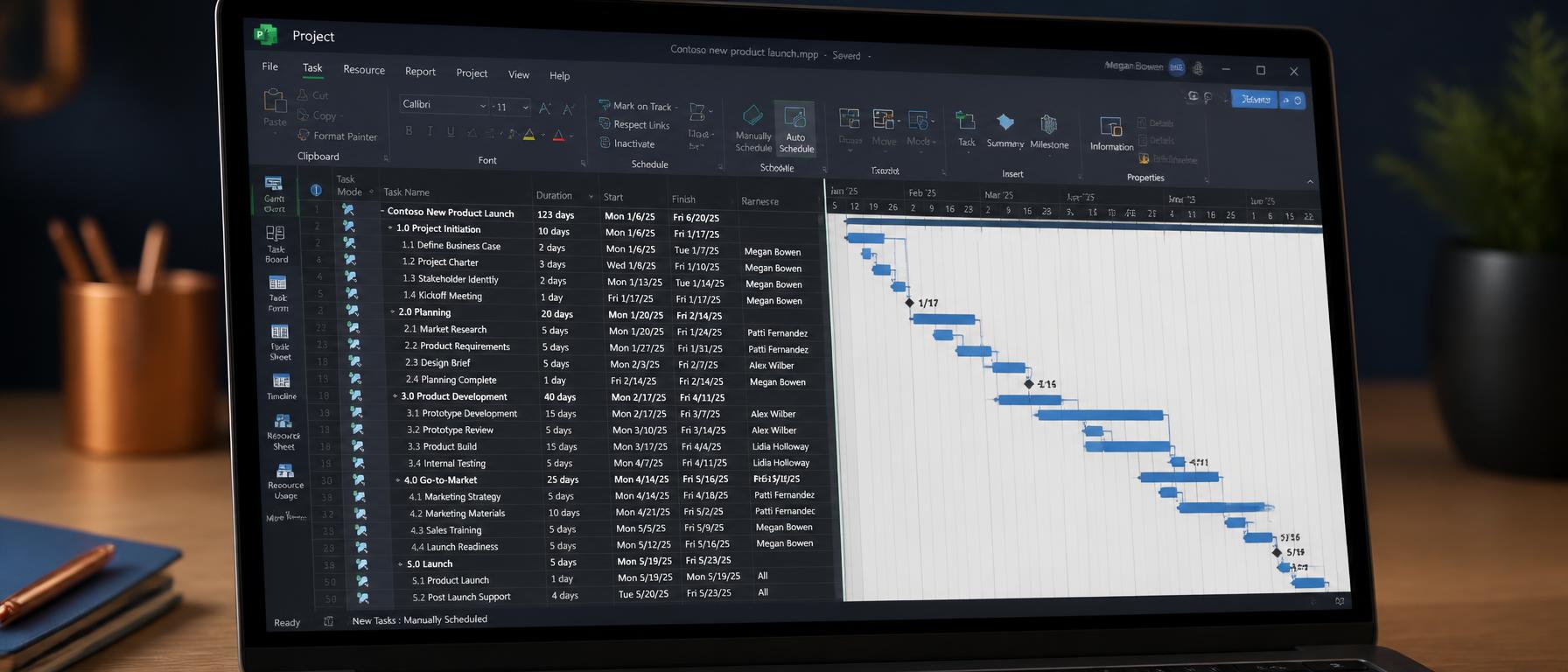
Microsoft Project is a powerful scheduling engine, but new users often turn it into an expensive task list. Avoid these common mistakes to get real value from the tool.
Agile principles are not limited to software teams. Marketing, operations, HR and consulting teams can all benefit from adaptive delivery when it is applied with discipline.